
Home    Services    Location    Staff    Forms    Resources    Archives   
 

Outside view of East Dallas Veterinary ClinicOur facility is located on the southwest corner of the Ferguson Road and Lakeland intersection, on the opposite corner from the Lakeland Hills post office, and across the street from the Walgreen's.

In business since 1972, we maintain a state-of-art facility for the diagnosing and treatment of our patients, as well as providing boarding for our companion animals.

We are pleased and proud to show our clients through our Clinic facilities whenever they visit, and encourage visits by the owners when their companions require extended hospital stays.


Advice and Tips

Summer’s coming along soon and folks are starting to think about their vacation plans. Those with children and pets have special considerations. While we can’t really advise you about the children, we can give you some thoughts about your pet.

Dr. Ken Cantrell
Dr. Ken Cantrell
Should You Travel With Your Pet? Some pets are not suited for travel because of temperament, illness or physical impairment. Visit with us if you have concerns about traveling with your pet.

If you decide your pet should not travel with you, consider your alternatives. You can board your pet at our facility, you can get a responsible relative or friend to look after your pet or you can hire a pet sitter. Keep in mind animals can get lonely when left at home alone, but you want to make sure your pet is comfortable if it is going to another home.

If you are asking someone other than your veterinarian to be responsible for your pet, be sure to give them appropriate information regarding the pet’s health and the telephone number of the veterinarian who normally cares for the pet. You should also provide any medications the pet normally takes, the food the pet is used to eating and you may also want to send along a favorite toy or two. And don’t forget to leave contact information where you may be reached in case of emergency.

Whatever choice you make, your pet needs to be up to date on vaccinations and current on heartworm medications. If you are not boarding your pet with your veterinarian, you may want to consider leaving a letter of instruction regarding emergency care of your pet.

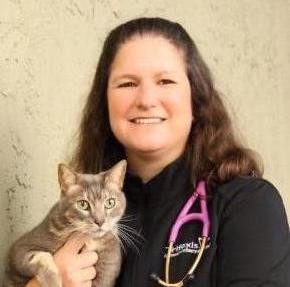
Dr. Virginia Ellsworth

Parvo Virus Alert We have run this before, but due to the number of cases of parvo virus we have already seen this year, we feel it is important to remind everyone.

Spring and early Summer are prime times for parvo virus to appear. If your pet’s vaccinations are not current, be sure you update your vaccinations.

Parvo is very costly to treat and can be fatal. Puppies are especially susceptible to this disease, which is characterized by vomiting and diarrhea. Parvo is very easily passed to other dogs. Wait six months before introducing a new puppy into a household that has had an outbreak of parvo.

Treatment is costly, vaccinations are not. Keep in mind, this is a virus, so once your pet catches parvo we can only treat the symptoms – vomiting, diarrhea, electrolyte imbalances and dehydration

Call us if you aren’t sure of the status of your pet’s vaccinations.

Tips and Comments continued
(right column)...


sophie mclesterTrudy's story:
I adopted Trudy when she was a few months old. In November, I had to put my 18 year old cat to sleep and my house was too quiet. Trudy changed all that. The minute I picked her up she started to purr and I knew she was the one for me. She thinks everything is a toy and is into everything! She often puts small toys in my shoes and is fascinated with the computer. When I walk in the door she comes running with her tail straight up to greet me. She makes me smile everyday and has brought me a lot of joy.

[EDVC was instrumental in helping our client find her new feline companion. Feel free to check with us when you are thinking about adopting a new pet. We may know of one that would be as perfect for you as Trudy.]


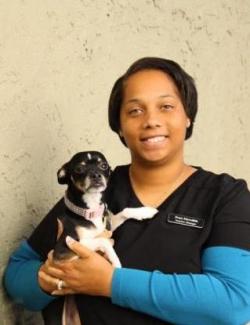
Michelle is a Registered Veterinary Technician and has been with our Clinic for 16 years. She attended Texas State Technical Institute in Waco, Texas to obtain her veterinary technician training and has been heavily involved with animals her entire life.

Michelle grew up in League City, Texas which is located between Houston and Galveston, and moved to the Dallas area after she finished her vet tech training in Waco. Growing up, she always had horses and "bunches of animals" — and when she was in FFA in high school, she raised lambs and cows. In addition to that, she also used to barrel race. Michelle currently has quite a menagerie at her house, including 2 Great Pyrenees pups and several older dogs and cats. Living on her own ranch, she also has various chickens, ducks, geese and turkeys.

Training and showing miniature horses and shetland ponies fills any spare time she may have and she is currently training and showing several Modern Shetland ponies. Michelle is quite the horsewoman, having trained and taken many of her own horses as well as those of her clients to National Champion and Hall of Fame status. Her primary areas of competition for her horses are in the hunter, jumper, driving and obstacle arenas.

...Tips and Comments continued

Kids, Pets and Worms Humans can become infected by roundworms or hookworms. These are two of the parasites EDVC checks for at the annual exam.

Heartworm Reminder
Young children are at a higher risk of being infected by roundworm or hookworm because of their play habits, combined with their attraction to animals. Children will often put their hands or fingers into their mouths after playing with dirt, sand in a sand box or petting the family dog or cat. Parents of toddlers need to keep close watch on them so they don’t eat contaminated soil and start teaching them at a young age to wash their hands. In addition, keep pets dewormed so play areas remain safe.

Once soil is contaminated it can take seven years for the eggs to die off. Puppies and kittens are the primary shedders of these parasites.

Another good reason to use a broadspectrum heartworm prevention like HeartGard, Interceptor or Sentinel is parasite control. These treat monthly for intestinal parasites as well as serving as heartworm prevention.

Travel Safety Tips
When traveling with your pet, take your pet’s own food, dishes, litter and litter box, leash, collar with ID tags, a first aid kit and a bottle of water from home (or a jug of distilled water). This will make your pet more comfortable, prepare you for emergencies and decrease the chances of an upset stomach from a strange brand of food.

Maintain the normal feeding and walking schedule as much as possible.

Be sure to bring old bath towels or paper towels in case of an accident and plastic bags to dispose of your pet’s waste.

It is a good idea to bring a picture of your pet for identification purposes in case you and your pet become separated. You should also consider getting a microchip – these chips are universally readable and veterinarians typically check for these when someone brings in a dog they found wandering.

Remember when traveling out of state by car, plane or train, most state laws require your pet to have a health certificate. These can be obtained up to 10 days prior to travel and require a physical exam.

More Tips and Advice: Click Here to view our archives of tips and advice from the Veterinarians at East Dallas Veterinary Clinic.